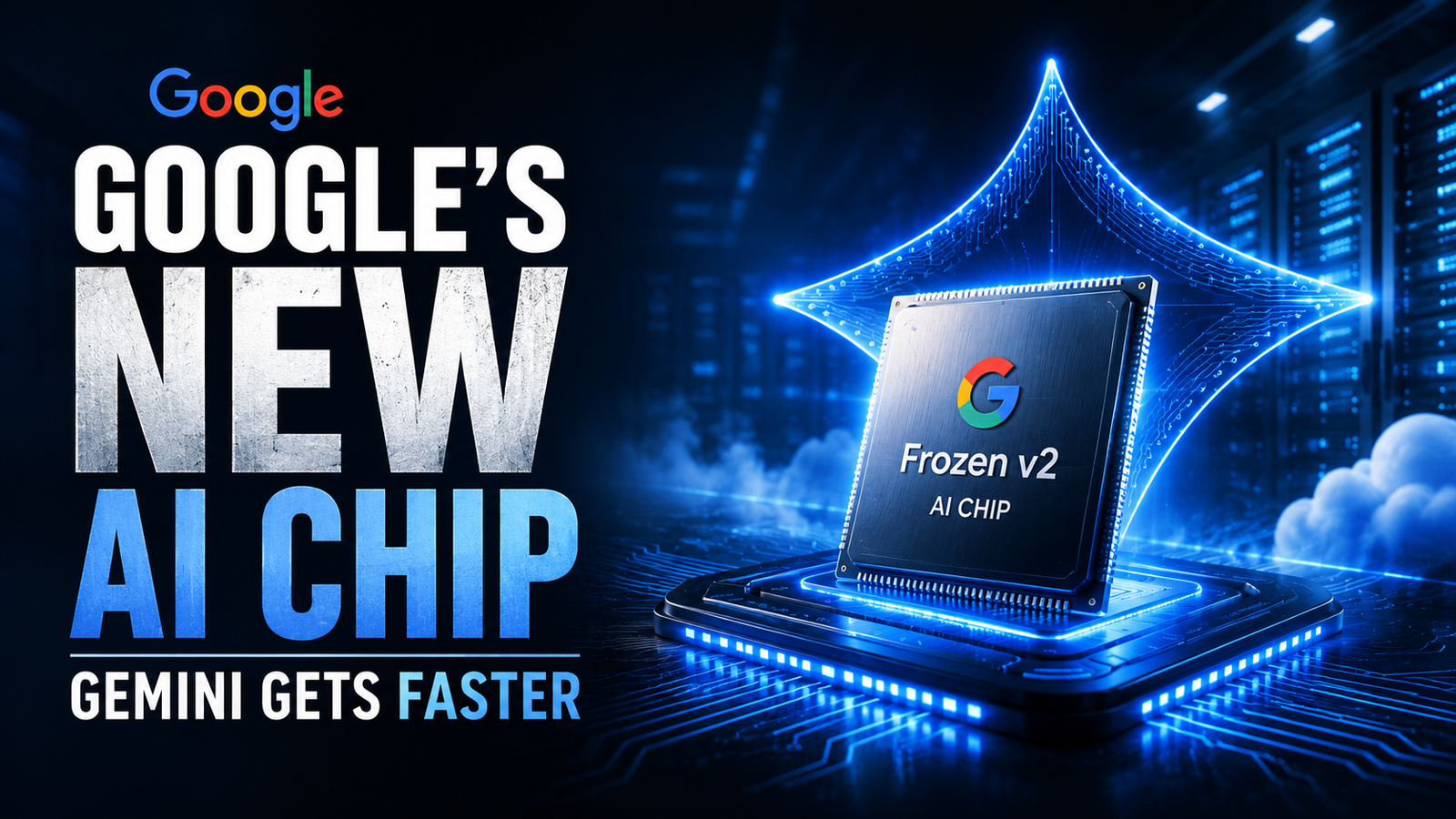
Google is reportedly developing a new server chip, internally called Frozen v2, to make its Gemini AI models run more efficiently. The chip is said to embed parts of Gemini’s architecture directly into hardware, which could reduce the number of calculations needed during inference and lower the energy cost of serving AI at scale.
The project matters because AI infrastructure has become a key battleground for the biggest technology companies. Google already relies on its custom TPUs, but Frozen v2 appears to push that strategy further by tailoring the chip more tightly to Gemini itself.
What the chip may do
Reports suggest Frozen v2 could deliver roughly six to ten times better efficiency than Google’s current AI chips, measured in tokens served per unit of power. The gain would reportedly come from cutting down compute steps and reducing data movement, both of which are major costs in large-model serving.
The chip is also described as a more specialized accelerator than Google’s existing TPUs. Instead of being built for many models, Frozen v2 appears focused on running Gemini as efficiently as possible.
Why it matters
The timing points to the growing pressure on AI infrastructure. Serving and training large models is expensive, and power consumption is becoming a major strategic issue across the industry.
A more efficient chip could help Google reduce operating costs, improve response times, and expand AI capacity without relying entirely on outside suppliers. That would matter not just for Gemini, but also for Google Cloud and other AI-powered products.
Strategic upside and risk
If Frozen v2 works as expected, Google could gain a meaningful advantage in the AI race. Better hardware efficiency could improve margins and give the company more room to scale AI services while keeping costs under control.
But there is also risk. A chip built around Gemini’s architecture may be less flexible if the model changes quickly, and the reported 2028 timeline leaves plenty of room for the market to shift before deployment.
Bigger picture
The report reinforces a larger trend in AI: the winners may be defined as much by hardware efficiency as by model quality. Google’s custom-silicon strategy has long been a strength, and Frozen v2 suggests the company is willing to go even further in tying hardware to its own AI stack.
For now, Frozen v2 looks like an early but important bet on the future of AI serving. If Google can deliver the promised efficiency gains, the chip could become a significant part of how Gemini is deployed and scaled in the years ahead.