Rubrik is trying to move cybersecurity out of the narrow world of prevention and into the much broader, more urgent world of recovery. In a feature interview, the company’s APAC vice president Ananth Nag laid out a thesis that is increasingly defining enterprise security in 2026: cyberattacks are inevitable, and the real competitive advantage lies in how fast and how cleanly a business can recover.
That shift matters because the old model of cybersecurity was built around the idea that attacks could be blocked before damage was done. Rubrik argues that model no longer holds in a world where attackers target identity systems, compromise backups, and increasingly use AI to move faster than human defenders can react. The company’s message is simple but powerful: recovery is not a back-office IT task anymore, but a board-level business continuity issue.
At the center of Rubrik’s thinking is what it calls cyber resilience. Unlike traditional backup, which is mainly about storing copies of data, cyber resilience is about finding a clean recovery point, restoring trust, and getting critical systems back online even while an attack is still unfolding. That distinction is crucial because in modern attacks, backup environments themselves are often targeted first, meaning the existence of backups alone no longer guarantees recoverability.
Rubrik is also reframing identity as a recovery problem, not just an access-control problem. According to Nag, attackers increasingly compromise administrative accounts and identity systems first because that gives them control over the rest of the environment. In practice, that means organizations need immutable, air-gapped backups of identity infrastructure and the ability to rebuild a trusted identity plane quickly after compromise.
What makes this especially relevant now is the rise of AI agents inside enterprises. Rubrik says autonomous systems can misbehave, hallucinate, or be compromised, creating a new class of risk that traditional security controls were never designed to handle. Its answer is a “rewind button” for agent actions: a way to surgically undo undesirable changes without rolling back good work, which reflects a broader shift toward governance that is context-aware, not just rule-based.
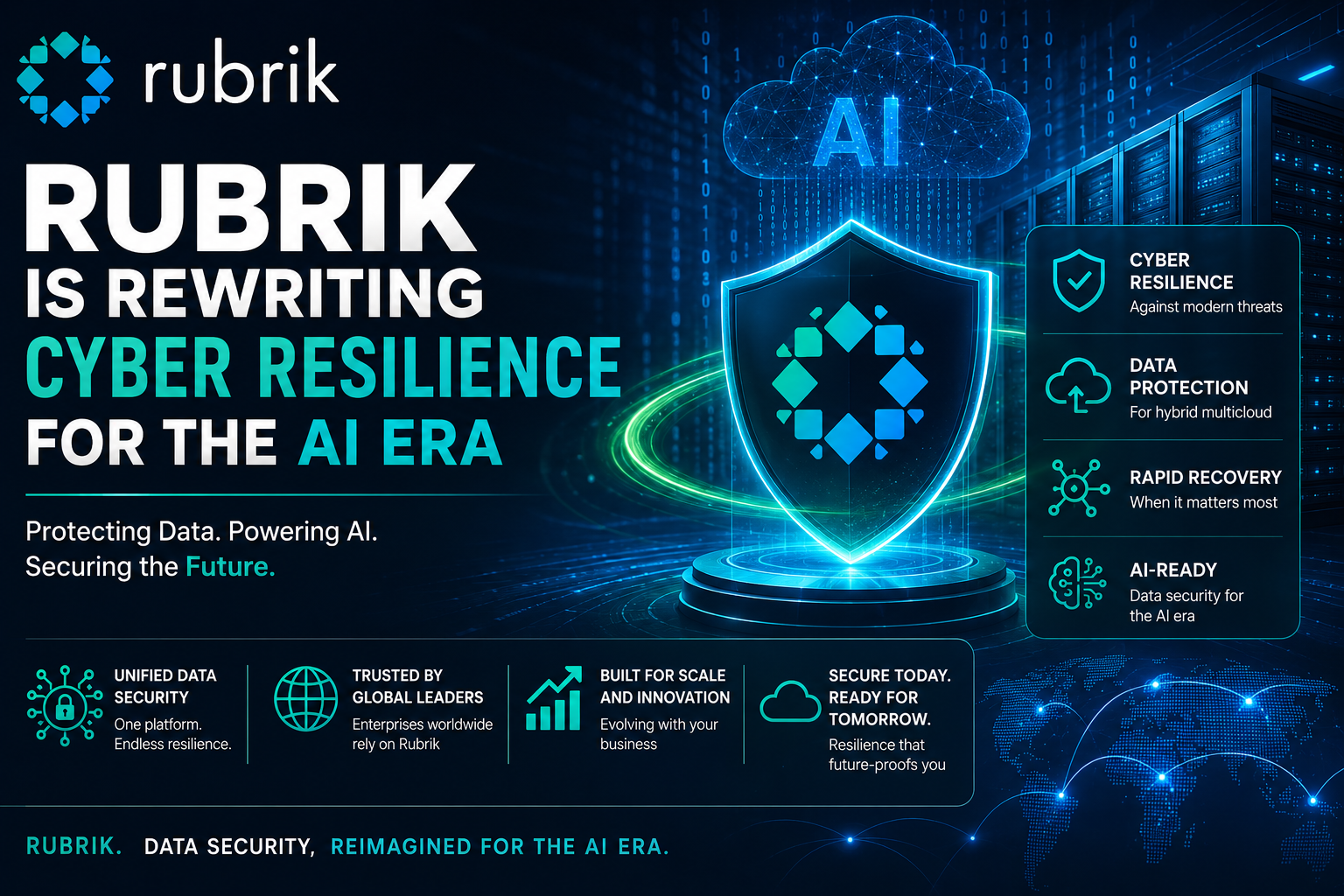
The company’s platform strategy mirrors that thesis. Rubrik’s materials describe a unified cyber resilience stack that combines data protection, identity security, threat monitoring, and recovery orchestration, with an emphasis on clean recovery points and preemptive recovery planning. The company says this approach helps organizations cut through tool sprawl, reduce recovery time, and avoid the danger of restoring compromised systems back into production.
This is where the story becomes bigger than one vendor. Rubrik is tapping into a broader market transition: boards now care less about how many attacks were stopped and more about whether the business can keep operating after one lands. That change is being accelerated by AI adoption, cloud sprawl, and tightening regulations, which are turning security from a technical line item into a compliance, risk, and continuity discussion.
The company is also betting that the security market itself is overdue for consolidation. Traditional prevention-and-detection cybersecurity is crowded and fragmented, while cyber resilience is a newer category with room for platform players that can unify data, identity, and recovery. That positioning is important because it suggests Rubrik wants to be seen not as another backup vendor, but as a business continuity platform for the AI era.
Why it matters
Rubrik’s thesis is resonating because it matches the reality many enterprises are facing: attacks are getting faster, identity is becoming the weak point, and AI agents are adding new attack surfaces. The companies that survive the next wave of incidents may not be the ones with the most alerts, but the ones that can recover fastest with the least business disruption.
In that sense, Rubrik is rewriting the rules of cyber resilience by changing the question leaders ask. The question is no longer “Can we stop every attack?” It is now “Can we keep the business running when one gets through?”