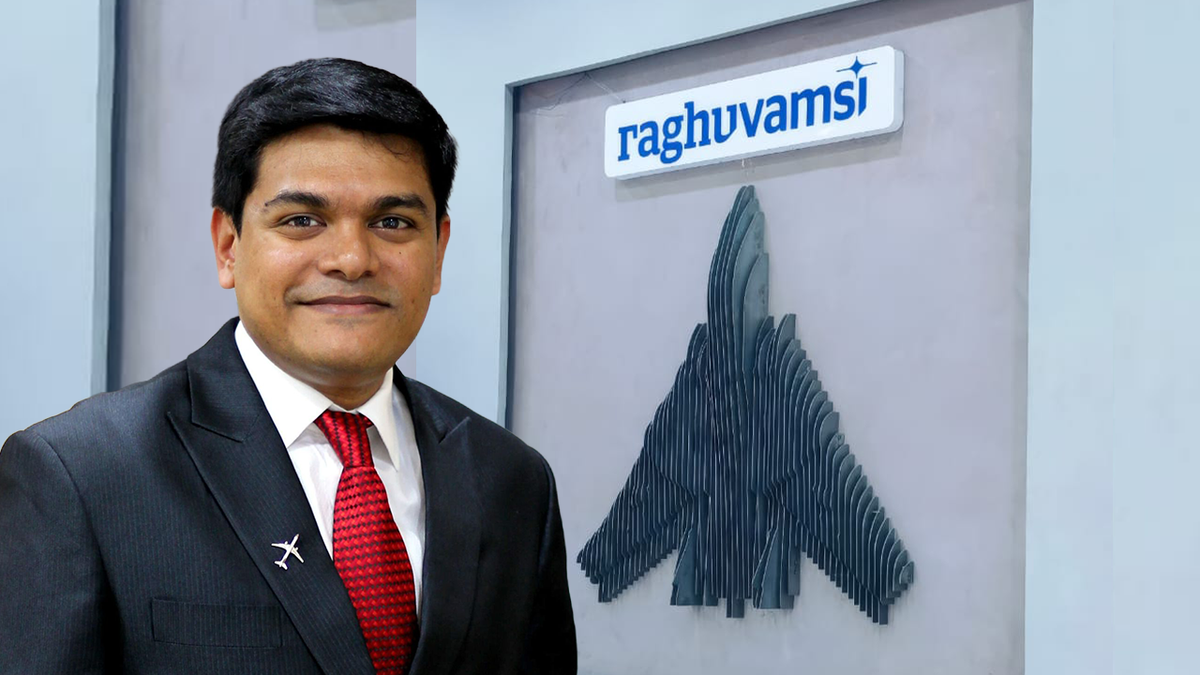
Raghu Vamsi Aerospace Group’s latest $40 million funding round marks a significant moment for one of India’s quietly expanding aerospace manufacturing firms. The Hyderabad-based company has built its reputation around precision engineering, and this investment suggests it is now aiming for a broader role in aerospace, defence, and deep-tech manufacturing.
Founded in 2004, Raghu Vamsi began as a precision engineering and manufacturing business before steadily expanding into aerospace and defence supply chains. Over time, it has developed capabilities in high-precision machining, sub-assemblies, tooling systems, and related manufacturing services, serving customers in sectors where reliability, certification, and engineering discipline matter as much as scale.
The company’s business model is rooted in long-cycle industrial manufacturing rather than consumer-facing growth. That makes it less visible than software startups, but potentially more durable if it can continue winning contracts from global aerospace and defence players. Its customer profile and technical positioning have helped it move from being a component supplier to a more integrated manufacturing partner.
The new funding round was led by Norwest and Skegen Asset Management, with participation from Indus Bridge Ventures, GJNX Ventures, and Ashish Kacholia. The company plans to use the capital to expand manufacturing capacity and deepen its footprint in India and international markets. For a capital-intensive sector like aerospace, that kind of backing can be crucial because building facilities, upgrading systems, and meeting certification standards require substantial upfront investment.
What makes Raghu Vamsi noteworthy is not just the funding itself, but the direction in which it is heading. The company has been moving beyond traditional machining into deeper system-level work, including defence-oriented and autonomous product development. That shift reflects a larger trend in Indian manufacturing: firms are increasingly trying to capture more value by owning design, integration, and product capabilities instead of staying limited to low-margin contract production.
This transition, however, is not without risk. Aerospace and defence businesses often face long sales cycles, strict quality requirements, and delays in customer approvals or product commercialization. Expanding into new product categories can improve long-term margins, but it also raises execution challenges, especially when companies must balance custom manufacturing with product development and scale-up.
Another important factor is timing. India’s aerospace and defence manufacturing ecosystem is growing, supported by localisation policies, private sector participation, and rising interest in indigenous capability. Companies like Raghu Vamsi are trying to position themselves as part of that shift. If they succeed, they could benefit from a larger domestic market and stronger export potential. If they move too fast, they risk spreading resources across too many ambitions at once.
From an unbiased perspective, the funding round should be seen as a vote of confidence rather than a guarantee of success. It indicates that investors see a credible industrial platform with room to scale, but the real test will be operational: can the company expand capacity, improve product depth, and maintain quality while moving into more complex businesses?
Raghu Vamsi’s journey is a useful example of how Indian manufacturing firms are changing. Instead of remaining limited to subcontracting roles, some are attempting to become technology-led industrial companies with global ambitions. This raise suggests Raghu Vamsi wants to be counted among that group.
In the coming years, the company’s progress will likely depend on three things: its ability to execute large-capex expansion, its success in converting technical capability into stable contracts, and its discipline in entering new aerospace and defence product lines. If it can do that, the current funding round may be remembered as a turning point in its evolution from precision manufacturer to deep-tech industrial player.